
What Our Test Is and Why It Endures
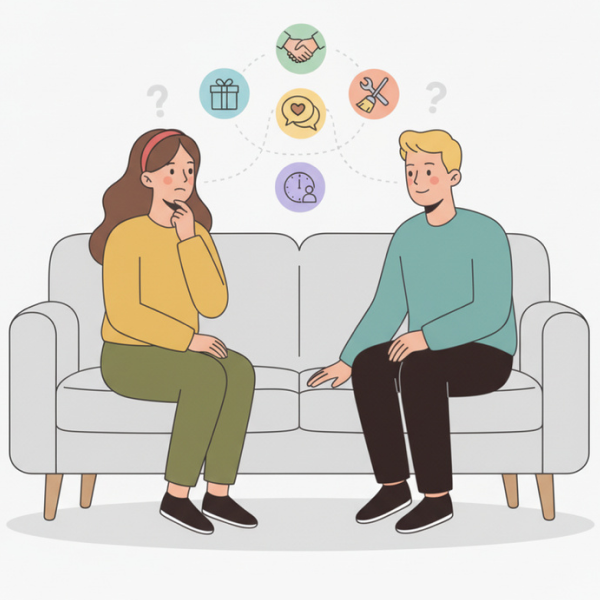
Relationships thrive when two people can clearly interpret how care is given and received. Many readers first encountered the framework through the bestseller 5 love languages by Gary Chapman, a work that translated nuanced emotional needs into everyday, repeatable behaviors. The idea is disarmingly simple yet deep: people tend to express and recognize affection in preferred patterns, and mismatches create accidental disconnection. When partners learn to “speak” what the other values, tension softens, trust grows, and daily life feels more cooperative.
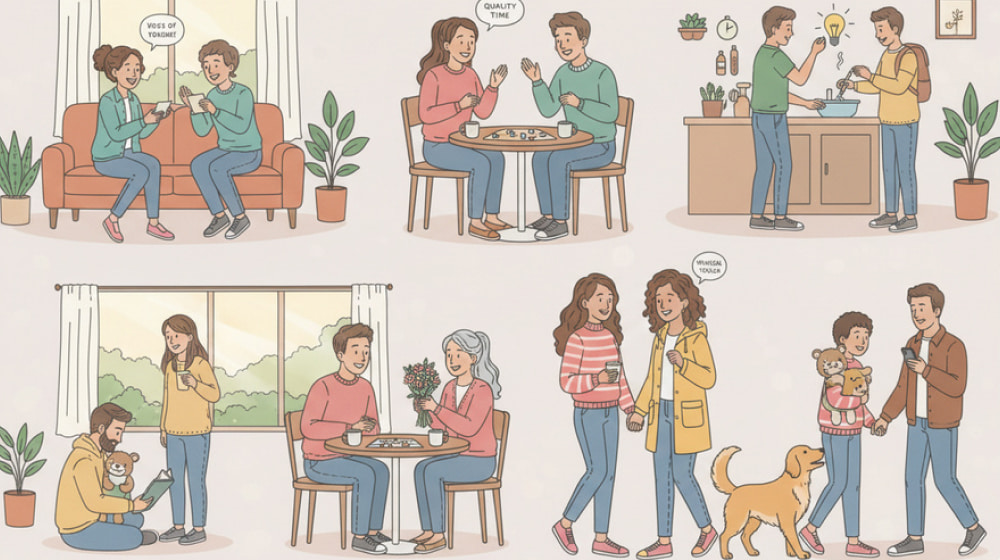
At its core, the approach reframes intimacy as a set of observable habits rather than a mysterious instinct. Practically, that means you can audit routines, adjust small gestures, and watch satisfaction rise without grand, cinematic gestures. Many couples report dramatic improvements after mapping their preferences across the 5 types of love language, because the vocabulary immediately turns vague complaints into solvable problems. Over time, the model becomes a shared compass: it guides apologies, strengthens rituals, and helps new relationships ramp up faster. The appeal endures because it is culturally flexible, behavior-focused, and easy to teach across different life stages.
Discover How Small Habits Can Create an Emotional Impact
Most people recognize patterns of appreciation long before they can name them. A clear overview helps you connect those patterns to daily practices that actually stick. The five categories, affirming words, devoted attention, supportive actions, thoughtful gifts, and comforting touch, are not rigid labels; they are lenses you can combine. When you use the framework as a menu rather than a rulebook, you avoid caricatures and tailor rituals with nuance.
| Language | What It Looks Like | Common Pitfall | Micro-Habits That Work |
|---|---|---|---|
| Words of Affirmation | Specific praise, encouragement, gratitude | Generic compliments feel hollow | Send a 2-line note naming one concrete win |
| Quality Time | Undivided attention, shared focus, deep talk | Phones steal presence | Establish device-free 20-minute check-ins |
| Acts of Service | Helpful tasks, invisible labor, follow-through | Doing the “wrong” task misses the mark | Ask what chore removes the most stress |
| Receiving Gifts | Meaningful tokens, mementos, surprises | Price over meaning disappoints | Keep a notes app of small preferences |
| Physical Touch | Hugs, hand-holding, closeness | Assuming timing is always welcome | Agree on consent cues and comfort zones |
To explore the categories in depth, many people consult a concise list of 5 love languages, then map examples to their routines. The original phrase 5 love languages gains power when it leads to tiny, repeatable actions, such as a nightly check-in, a short thank-you message, or a ritualized embrace after work. Try experimenting for two weeks with one micro-habit from each category, and track the emotional impact with a quick daily note.
-
![]() It converts abstract needs into concrete behaviors you can practice.
It converts abstract needs into concrete behaviors you can practice. -
![]() It encourages proactive empathy instead of reactive fixes.
It encourages proactive empathy instead of reactive fixes. -
![]() It builds rituals that compound into trust and security.
It builds rituals that compound into trust and security.


Couples often start here due to a desire for calmer communication and fewer misunderstandings. Research on relationship satisfaction consistently highlights responsiveness, reliability, and positive affect as drivers of closeness. Many people use a validated survey such as the 5 love languages test to create a baseline, then they implement micro-behavior changes and watch friction drop. The immediate clarity, what to do more of, what to do less of, creates momentum that feels tangible within days.
Start the TestUse 5 Love Languages to Strengthen Your Partnership
Beyond the relational payoff, the framework reduces cognitive load by narrowing choices to a handful of specific moves. Measuring progress can be as simple as tracking weekly mood, conflict frequency, and perceived support. For structured self-reflection, many readers try a formal assessment like the 5 love language test, then revisit results every quarter to see whether context has shifted. When both partners share their top preferences, planning date nights, household tasks, and restorative time becomes a collaborative game rather than a negotiation minefield.

Applying the Languages With Kids and Teens
For younger children, families often adapt games and simple activities to match preferences, because playful delivery sticks better than lectures. Many households structure weekly traditions that support consistency, which is how small gestures become secure attachment signals. When tailoring for grade-schoolers, guides specifically addressing 5 love languages for kids can translate the model into age-appropriate ideas. With adolescents, agency matters, and collaborative planning is key to respect and buy-in. Teenagers need a say in what feels supportive, and they benefit from check-ins that honor autonomy while offering reliable care. Curiosity beats assumption here, especially when schedules are packed and emotions run high. Some families use a light-touch screen or worksheet that resembles a 5 love languages test for teens, then co-create weekly experiments around homework, activities, and downtime. The goal is to make it safe to ask for what helps, and to keep options flexible as identity and needs evolve.
Growth for Singles & Adults
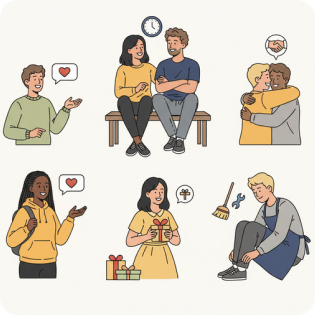
Self-knowledge is a powerful accelerator of relational health, even before you meet a partner. Journaling about past relationships, noticing what memories feel nourishing, and running small experiments will sharpen your sense of what lands. Guides tailored to individual growth, such as the 5 love languages singles edition, often pair reflection prompts with micro-habits for friendships, dating, and self-care. The same patterns that fuel romance also enrich platonic bonds and community ties.
Start the Test-
![]() Use first dates to discuss what small kindnesses feel restorative.
Use first dates to discuss what small kindnesses feel restorative. -
![]() Design a shared ritual that marks the transition from work to connection.
Design a shared ritual that marks the transition from work to connection. -
![]() Revisit preferences after big life events or schedule shifts.
Revisit preferences after big life events or schedule shifts.
Discover Practical Ways to Show Appreciation
Connection principles carry into professional life, where appreciation and psychological safety influence performance. Managers who learn how each teammate prefers recognition can reduce disengagement and encourage consistent excellence. Tools designed for organizations, like the 5 love languages workplace quiz, translate personal insights into team norms, helping leaders express appreciation in ways people actually feel. The result is better feedback loops, more effective one-on-ones, and a healthier culture.

Not every experiment needs a budget or a big time investment. Peer shout-outs, thoughtful task-swaps, and predictable check-ins are all low-cost levers with outsized impact. For individuals testing the waters, many start with resources that resemble a 5 love languages quiz free, then build a simple action plan for the next thirty days. Community groups and volunteer teams can also benefit from short rituals that honor contributions, close meetings with gratitude, and celebrate progress in concrete ways.

Adult learners usually appreciate practical templates: weekly rituals, conflict scripts, and planning checklists. Establishing a shared language early makes boundaries clearer and gestures more intentional, which protects goodwill during stressful seasons. For those mapping preferences during early dating, the 5 love languages quiz adults can serve as a playful icebreaker that still yields actionable insights. Think of it as a map you revise together as circumstances change, not a fixed label that limits experimentation.
Start the Test-
![]() Standardize appreciation rituals so they don’t depend on mood.
Standardize appreciation rituals so they don’t depend on mood. -
![]() Replace generic praise with specific, behavior-focused feedback.
Replace generic praise with specific, behavior-focused feedback. -
![]() Build opt-in recognition menus to respect diverse preferences.
Build opt-in recognition menus to respect diverse preferences.
Take the 5 Love Languages Quiz for Couples, Teens & Kids
Get StartedFrequently Asked Questions
- How do I figure out my primary love language?Start by recalling moments when you felt most cared for, then identify the behavior at the center of each memory. Many people take a brief assessment to compare instincts with data, and they experiment for two weeks to validate the results. If you like a quick starting point, a playful option such as the 5 love languages quiz can nudge your reflection in a helpful direction.
- Can couples have different love languages and still thrive?Absolutely, and mismatch is common. Success hinges on mutual curiosity and the willingness to practice small, consistent habits that speak to each person’s preferences. When partners want a structured conversation starter, a joint activity like the 5 love languages quiz couples can surface overlaps and differences without blame.
- Do these languages change over time?Preferences often shift with context, new jobs, parenting, stress, or health changes. Treat the model as a living document and plan quarterly check-ins to refresh what works. If you enjoy a low-barrier tool, options similar to a 5 love languages test free make it easy to reassess without pressure.
- What if I don’t relate to any single category?Many people identify with a blend rather than a single dominant style. Consider ranking all five and designing a rotation of micro-habits that honors your top two or three. The mix can be situation-specific, which is normal and healthy.
- How can I bring this up without sounding cheesy?Lead with curiosity and an invitation: “I want to make sure I’m showing care in ways that feel good for you, what lands best?” Share one concrete example you appreciate from them, and offer one you’d love to receive, making it practical instead of abstract.
The Latest News
 Your Ultimate Guide to Love Language Quizzes and Real-Life Results Take the 5 Love Languages Quiz for Couples, Teens & Kids Get Started What Are Love Languages and Why This Assessment Endures People crave connection, yet they often talk past each other without realizing it. The love languages framework offers a simple lens for understanding how...
 - 26 November, 2025
- The Ultimate Guide to Love Language Test: Understand, Connect, Thrive Take the 5 Love Languages Quiz for Couples, Teens & Kids Get Started What This Relationship Assessment Is and Why It Matters Understanding how you and the people you care about express affection can transform everyday interactions. A well-designed relationship assessment transla...
- 25 November, 2025
- Free 5 Love Languages Quizzes: Understand, Connect, Thrive Take the 5 Love Languages Quiz for Couples, Teens & Kids Get Started What the Love Languages Framework Is and Why It Matters Relationships thrive when partners feel seen, appreciated, and emotionally safe. The love languages framework explains how people prefer to give and recei...
- 24 November, 2025
Please Note
This website (5lovelanguagetest.net) is not an official representative, creator or developer of this application, game, or product. All the copyrighted materials belong to their respective owners. All the content on this website is used for educational and informative purposes only.