A Parent’s Guide to Love Languages in Childhood: Nurturing Connection That Sticks
- 20 November 2025
Take the 5 Love Languages Quiz for Couples, Teens & Kids
Get StartedWhat the Five Styles Mean for Children
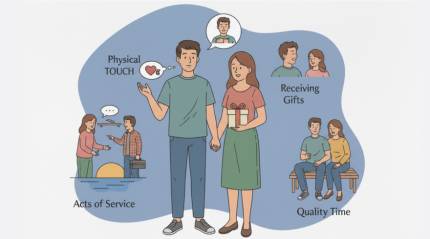
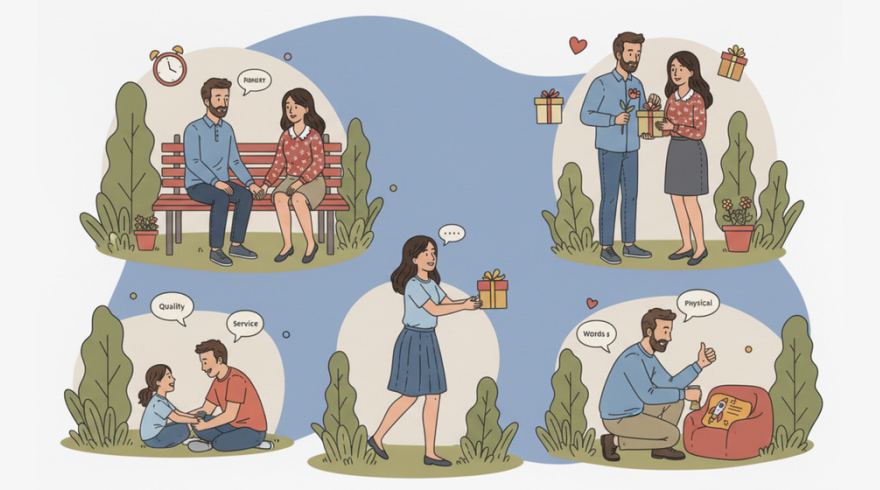
Children experience love through patterns that feel intuitive to them, and those patterns often cluster into five recognizable styles: words of affirmation, quality time, receiving gifts, acts of service, and physical touch. Each style answers the inner question “Am I seen and safe?” in a different way. One child lights up when you narrate their effort; another relaxes only after a slow, one-on-one walk; a third clutches small keepsakes as proof of care; a fourth thrives when you help set up their art station; and a fifth melts with hugs, high-fives, and back rubs. None is better than another, and most kids appreciate a blend, with one or two rising to the top.
Misunderstandings usually happen when adults give affection in the way they prefer, not in the way the child receives it. That’s why decoding a youngster’s signals can transform ordinary routines into bonding opportunities that build resilience and trust. Many families find that the framework of 5 love languages for kids makes hard-to-read moments suddenly make sense, especially during transitions like bedtime, homework, or leaving the playground. As you observe, keep in mind that developmental stages, temperament, and sensory needs all color how a child broadcasts connection cues.
- Words kids say are clues, but so are the requests they repeat.
- Energy spikes or dips after certain interactions reveal preferences.
- When in doubt, try micro-experiments and watch what sticks.
Why Understanding These Styles Boosts Wellbeing
When caregivers align affection with a child’s preferred channel, everyday life gets easier. Directions land with less friction because your relationship account stays full. Self-confidence rises as kids feel known for who they are, not only for what they do. Emotional regulation improves since secure connection acts like noise-cancelling headphones for stress. Even siblings compete less, because attention feels fair rather than scarce.
Assessment does not need to be clinical or time-consuming, and it can be playful enough to engage even reluctant kids. One particularly approachable doorway is the 5 love languages quiz kids, which turns observation into actionable insight without labeling a child permanently. Once you identify a leading style, you can tailor routines, like morning send-offs, after-school decompression, and bedtime wind-downs, to match, and then monitor the ripple effects on behavior and mood.
- Better follow-through on routines because cues match how love is felt.
- Fewer power struggles thanks to a stronger baseline of safety.
- More cooperation in group settings where tailored connection precedes requests.
- Improved school readiness as executive function grows inside secure attachment.
How to Identify Your Child’s Primary Style
Start with a week of gentle observation. Notice what your child requests when they’re tired, what they offer to others, and what they complain about missing. Track patterns during transitions and in recovery after meltdowns. The behaviors you see under stress often reveal the channel that most quickly fills their emotional tank. Also notice your own default style, because children commonly mirror or compensate for what’s available at home.
Data beats guesswork in family life, and a small dose of structure can clarify muddy signals. If you want a quick starting point, try a short 5 love languages kids quiz and then validate results with real-life experiments at breakfast, pickup, and bedtime. Rotate through the five styles for a few days, jotting down which sparks the biggest, most consistent glow. Revisit your notes monthly, since preferences can shift with growth spurts, classroom dynamics, or new siblings.
- Look for “first ask” patterns: time, help, touch, praise, or tangible keepsakes.
- Test one micro-habit at a time to isolate effects.
- Invite the child’s voice: “When do you feel most cared for?”
- Ask teachers or grandparents for outside observations.
Practical Strategies By Love Style
Once you’ve sketched a likely profile, embed micro-habits into ordinary routines so connection becomes automatic. Keep ideas small and repeatable; consistency beats grand gestures. Mix and match across styles, but double down on the one that predictably recharges your child after a tough day.
Words of Affirmation
- Label effort, strategy, and kindness instead of generic “good job.”
- Create a “strengths wall” with rotating notes your child helps choose.
- Use morning mantras and bedtime reflections anchored in specifics.
Quality Time
- Schedule 10-minute “no-phone” check-ins that your child names.
- Adopt rituals, walk-and-talk, tea time, or shared reading, that bookend the day.
- Use eye level, shoulder-to-shoulder activities to reduce performance pressure.
| Style | Signal Kids Show | Daily Micro-Habit | Watch-Out |
|---|---|---|---|
| Words | Asks to be noticed, repeats “Look!” often | Specific praise tied to process | Flattery that feels fake |
| Time | Stalls at transitions, seeks one-on-one | Predictable mini-dates | Presence without attention |
| Gifts | Collects keepsakes, treasures notes | Tiny tokens linked to memories | Bribery that replaces connection |
| Service | Asks for help setting up tasks | Co-create checklists and scaffolds | Over-rescuing skills they can build |
| Touch | Seeks closeness, fidgets toward you | Hugs, high-fives, rhythmic squeezes | Ignoring consent and context |
Receiving Gifts
- Offer symbolic tokens, bookmarks, drawings, nature finds, tied to shared moments.
- Start a “memory box” they curate, rotating items that mark milestones.
- Attach a tiny note to lunch with a doodle related to the day’s plan.
Acts of Service
- Set up environments that reduce friction: labeled bins, visual schedules.
- Partner on tough tasks for the first few steps, then fade support.
- Teach routines as co-adventures rather than chores.
Physical Touch
- Create consent-based touch rituals: secret handshakes, “pressure burrito” with blankets.
- Use movement breaks with playful contact, wheelbarrow walks, dance bursts.
- Replace scolding with a gentle shoulder tap before giving directions.
For playful learners, a gamified prompt like a 5 languages love quiz kids spark can open a conversation about what connection truly feels like, which helps you choose the best micro-habits to practice this week.
Common Pitfalls and Advanced Tips
It’s easy to assume a style based on your own preferences or on a single good day, but sustainable connection depends on patterns. Avoid turning styles into labels that box kids in; think of them as weather reports, not personality verdicts. Keep ethics in view: using affection to control behavior corrodes trust. Instead, use connection to meet core needs, then set limits naturally.
Update your approach as seasons change, because a growth spurt, a new classroom, or shifting friendships can tweak what fills your child’s tank. When revisiting your plan each season, you might consult a brief 5 languages of love quiz for kids to check whether preferences have shifted, and then adjust your routines accordingly. Pair that reflection with a light family retrospective: What habit felt best? What should we stop, start, or continue? Finally, build a bank of repair behaviors, apologizing specifically, scheduling reconnection, and narrating your learning, so missteps become trust deposits.
- Don’t overuse any one channel; variety keeps connection fresh.
- Respect sensory profiles, cultural norms, and public boundaries.
- Teach kids to notice and ask for what they need respectfully.
- Use visual trackers to celebrate consistent connection habits.
FAQ: Practical Answers for Busy Families
How many styles can a child have at once?
Most kids appreciate all five in some measure, with one or two leading the pack. Think “playlist,” not “single track.” You’ll get the best results by feeding the top style daily while sprinkling in the others across the week.
Can a child’s preferred style change over time?
Yes. Developmental stages, school context, stress, and new relationships can shift what feels most nourishing. Reassess every few months and watch key transition points like the start of a school year or the arrival of a sibling.
What if siblings have different styles?
That’s normal. Build shared family rituals that touch multiple styles, then add quick one-on-one habits tailored to each child. A simple rotation ensures everyone’s needs get airtime without exhausting caregivers.
How do we address mismatches between caregiver and child?
Start by noticing your own default and practicing the child’s style in small, repeatable doses. Scripts, timers, and visual cues can help you remember. Over time, the new habit becomes automatic and the relationship eases.
Will focusing on styles spoil a child or encourage manipulation?
Meeting connection needs is not spoiling; it is the groundwork for boundaries that stick. When kids feel secure, they are more open to guidance, less reactive, and better able to practice responsibility and empathy.
Measuring Progress and Staying Consistent
Track what works with a simple weekly reflection: What connection habit did we use, when, and how did our child respond? Patterns emerge quickly when you keep notes, even if they are short. Pair that with gentle course corrections rather than dramatic overhauls to protect energy and momentum.
As your toolkit grows, remember that the goal is a felt sense of warmth and safety, not a perfect checklist. Celebrate micro-wins, retire tactics that lose steam, and keep experimenting with small, human moments that tell your child, “You matter, exactly as you are.” In some families, a playful check-in through the 5 languages love quiz kids style of conversation offers a springboard for weekly planning, while in others, quiet observation does the job just as well.